
Why look at real examples
Most homes we work on include a pooja unit, and families usually have strong preferences about its form. The four examples below come from completed CMS Interiors projects. Each is shown as built, with its project and location, so you can point to what you like when you brief us.
Kiran, DC Halli: decorative cutwork with lower storage
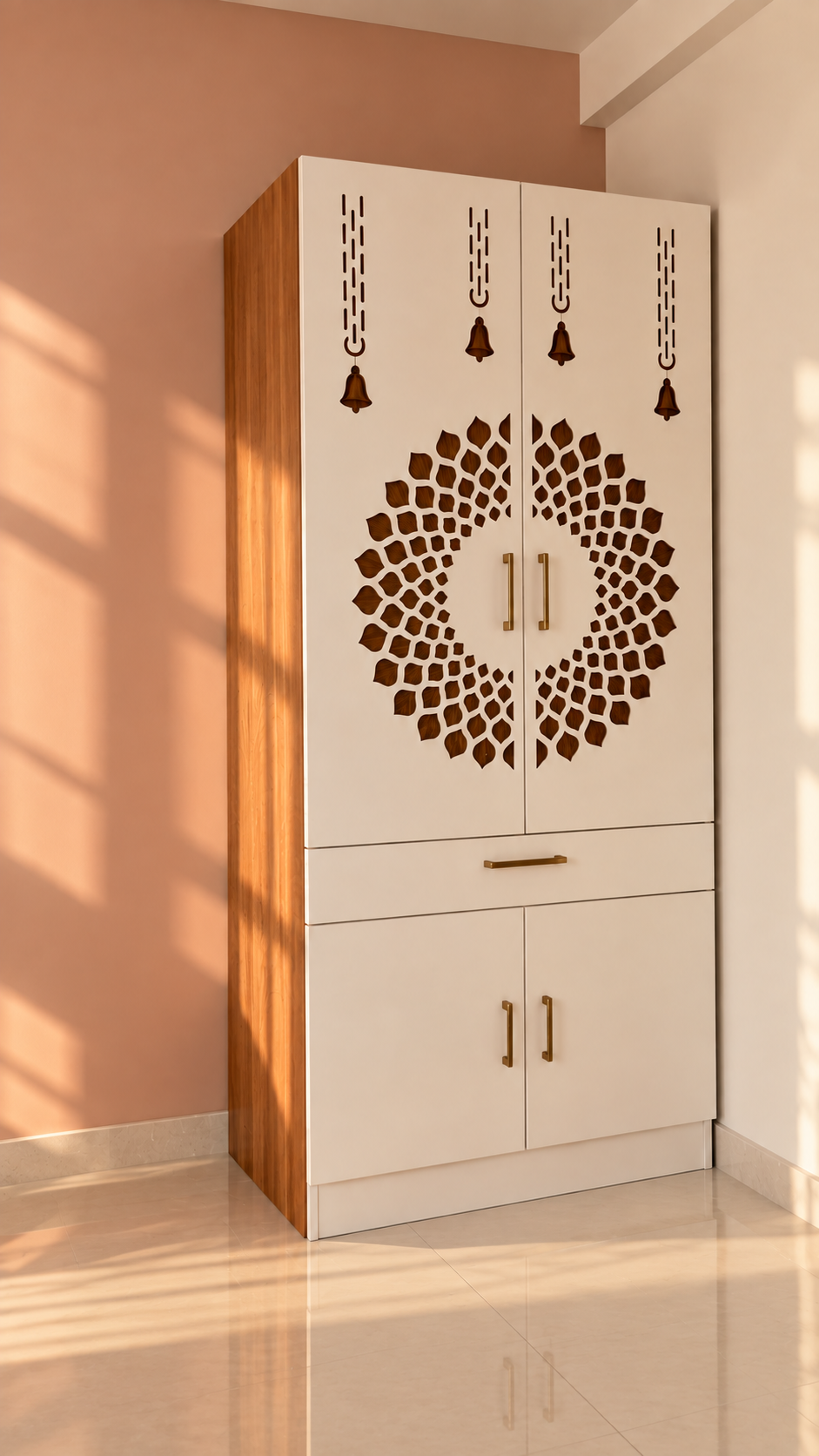
Kiran’s pooja unit in Vijaya Bank Layout, DC Halli is white, with decorative cutwork doors above and closed storage below. The lower cabinet keeps lamps, oil and other items out of sight.
Gokul, Begur: bell cut-outs and a stepped canopy
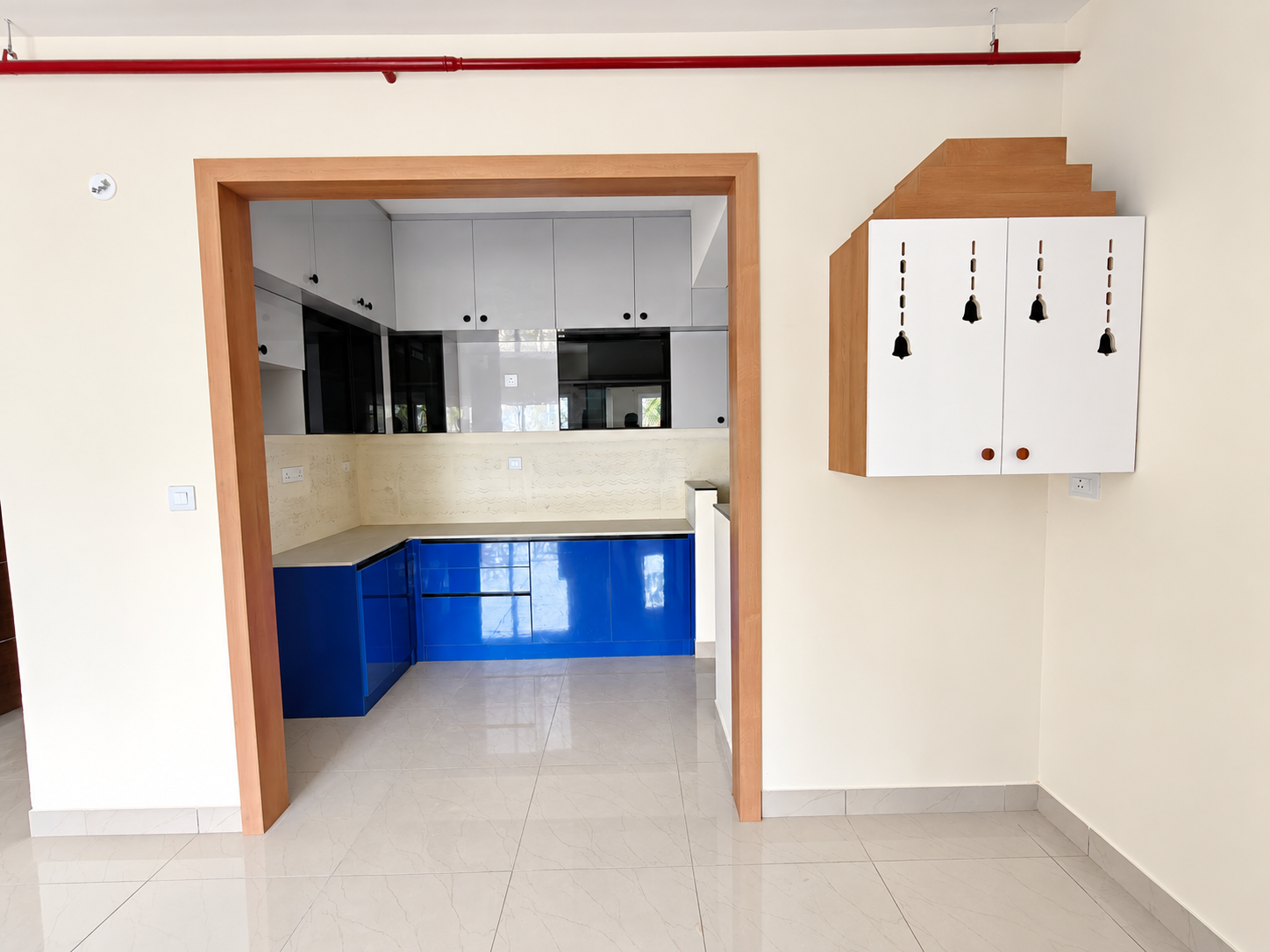
The Gokul project in Begur has a wall-mounted unit with white bell-cutout doors and a stepped wooden canopy. A wall-mounted unit keeps the floor clear, which helps in compact 2BHK layouts.
Swarna Griha, Kolar: leaf-pattern cutwork
Swarna Griha – 3 in Kolar uses leaf-pattern cutwork doors, bell motifs and a stepped wooden canopy. The cutwork pattern is a simple way to make a white unit feel detailed.
Hiranandhini – Raju, Hulimavu
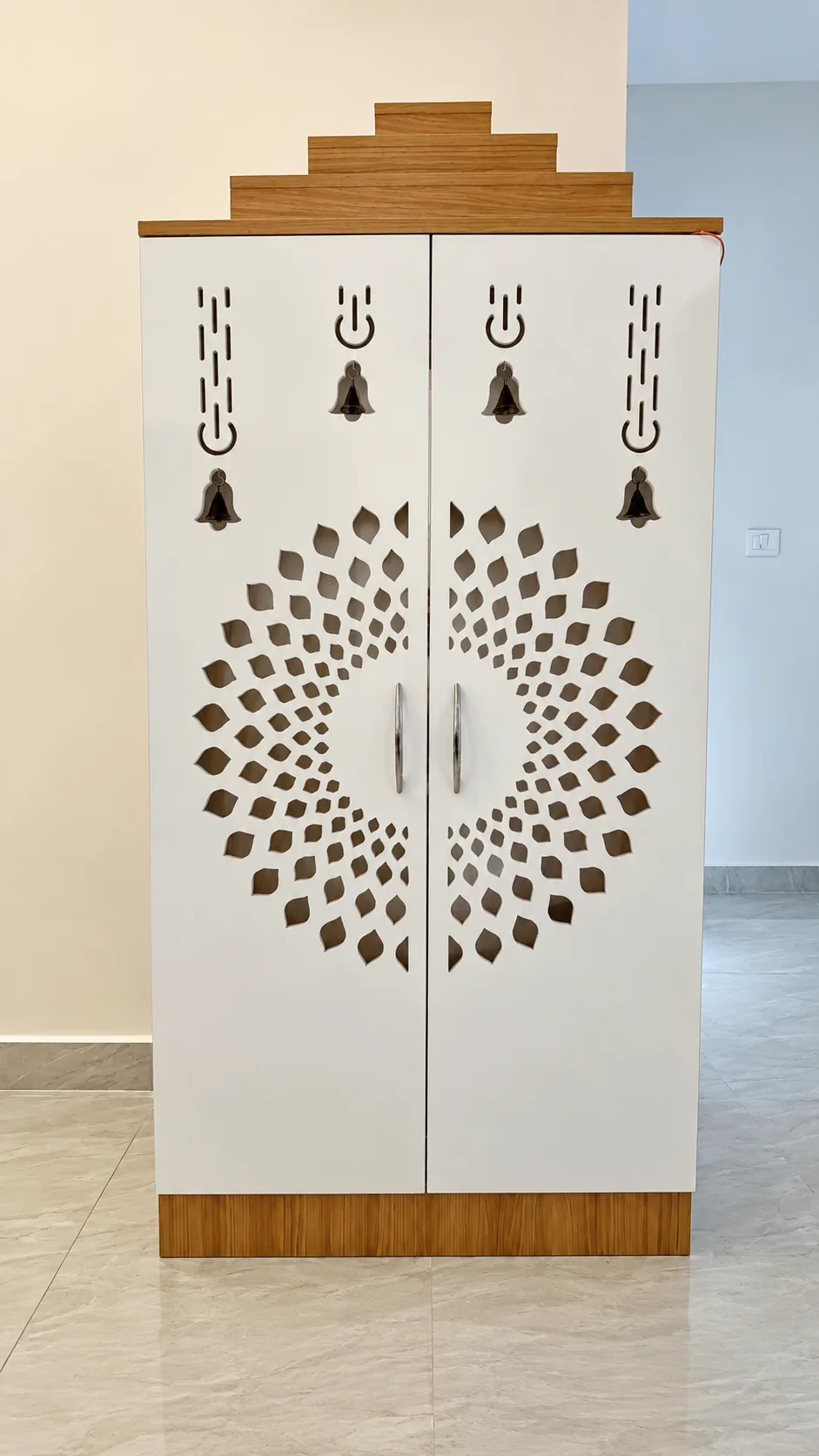
The Hulimavu 3BHK includes its own pooja unit, photographed from the front and as installed. Compare its proportions with the others to judge what size suits your wall.
Questions to settle before designing yours
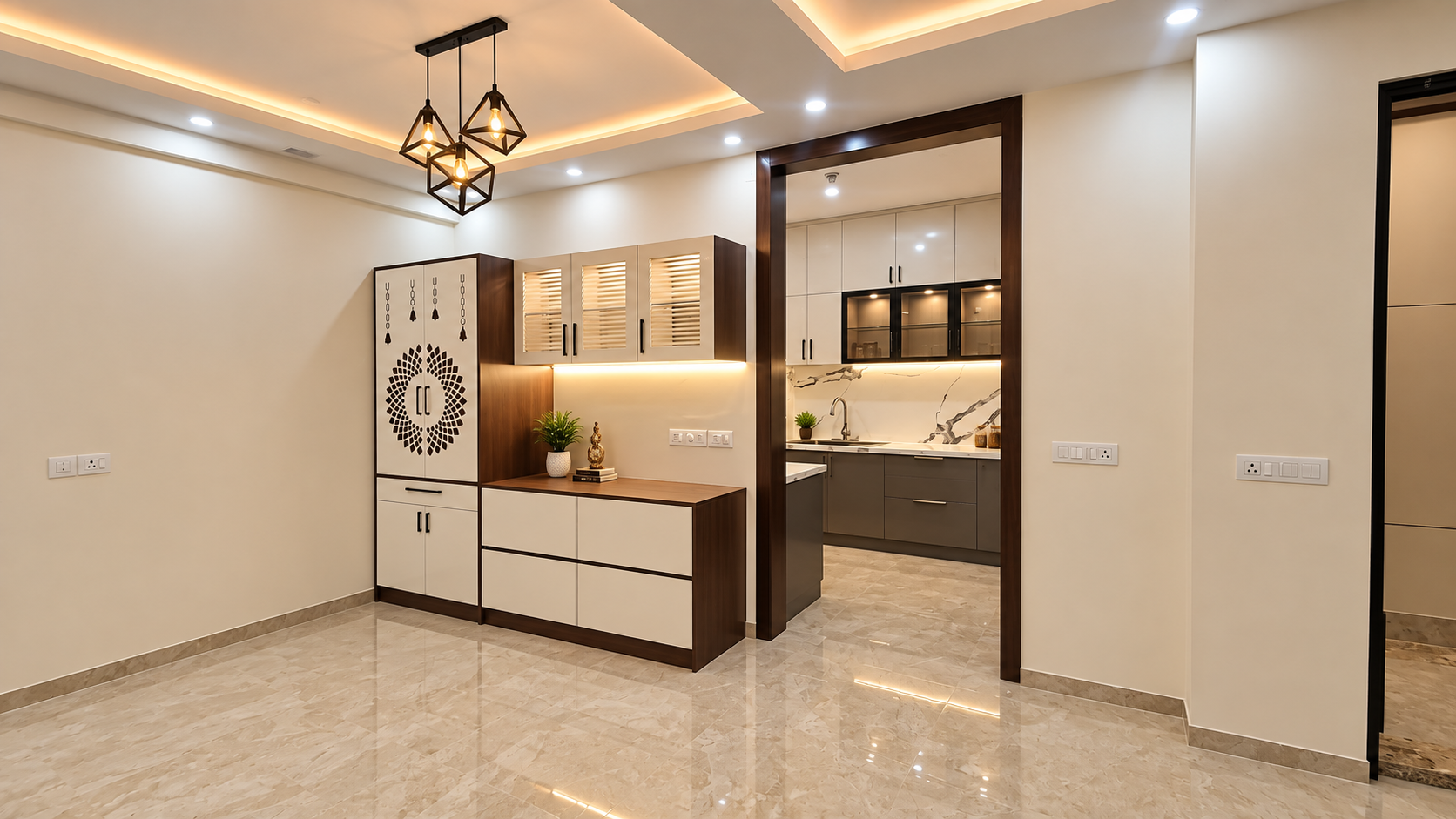
Decide where the unit will go and which direction it should face, according to your family’s practice. Measure the wall and check nearby switches and windows.
Plan for lamps: ask about heat-safe surfaces and ventilation near the flame. List what you need to store, such as idols, books, lamps and oil, so shelves and drawers fit them. Choose between doors, cutwork or an open front, and whether you want lighting inside.
Bring photographs of the designs you like and call +91 90602 66789 to discuss your pooja unit.
Talk to CMS Interiors
Based in Begur, Bengaluru, CMS Interiors designs, manufactures and executes residential and commercial interiors — and supports interior professionals with factory job work.
Plan Your Home Interiors